Art

DEFINITION
Jes Vesconte
Movement Artist and Climate Activist

Art is a way of co-creating communities, collaborations and coalitions for intersectional climate justice and eco liberation. Art can take form in personal passions or cultural traditions, and can stretch from street art to exhibitions, from painting, cooking, acting, movement and music to conceptual pieces and community praxis.

Art is what we make it. Art is what we make together. Art has nothing to do with talent and everything to do with practice. Art is both everyday and extraordinary. Art, in our aesthetic experience of material conditions, social relations and the power of storytelling, is an elementary particle of politics, religions, cultures and communities. Art is the creativity of Earth and ecosystems, generated in the cyclical interwoven dance of life, death, being and otherwise. Art is bodies feeling embodied liberation. Art is how we prefiguratively co-create other worlds that are possible, in the present. As Toni Cade Bambara put it, “the role of the artist is to make revolution irresistible."
Art Pamela EA

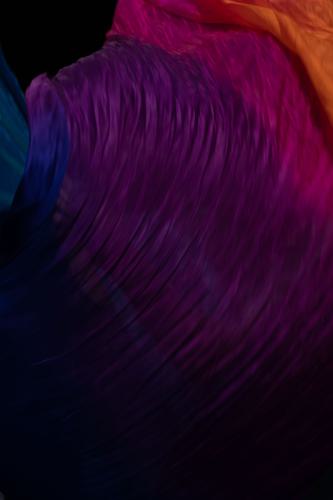
Artists dance with silk fans as they join tens of thousands of people in New York City marching to end fossil fuels. New York City, USA, 2023.
Photography By Pamela EA

RESEARCH
Definition edited by Zahra Saifee
Research by Micheala Chan
Fact-checking by Hailey Basiouny

Definition April 20, 2023
Research July 24, 2026

  1. Art offers an essential, non‑instrumental contribution to climate action. It enables open‑ended, emotionally grounded, community‑based inquiry that makes climate change meaningful beyond scientific facts, helping people process grief, imagine alternative futures, and engage with the profound cultural transformations required to stay below 1.5°C.

  2. GenAI climate imagery is shaped by biased, opaque training data that reproduce Western tropes, racialised and gendered stereotypes, and generic symbols like polar bears. This means that these images are not neutral but synthetic, co‑created outputs that distort real climate impacts and erase human responsibility.

  3. The explosion of genAI deepfakes undermines “seeing is believing,” flooding the internet with believable but fabricated climate visuals that weaken public understanding, depoliticise climate change, and limit collective imagination at a moment when political will for climate action is fragile. (2)


  4. Across cultures, art made from natural materials (from Marshall Islands stick charts to Hokusai’s waves and the annually renewed Djenne Mosque) shows how climate and environment shape artistic practice, preserve knowledge, and help us understand planetary systems, revealing both past changes and imminent futures while expressing our human urge to create.

  5. The Dreamtime (Jukurrpa) refers to Aboriginal systems of creation, law and ancestral presence - a non‑linear cosmology in which Ancestor Beings shaped the world and remain embedded in land, animals and people. These stories form the spiritual and cultural foundations from which much Aboriginal art draws its meaning, symbolism and connection to country.

  6. The English term “Dreamtime,” coined by white anthropologists in the 1890s, is a colonial oversimplification that flattens diverse cultural traditions; although widely used in art discourse, each language group has its own terms and cosmologies, making “Dreamtime” an inadequate catch‑all for the complexity that Aboriginal art actually expresses. (4)

  7. Despite rhetoric about globalisation, the contemporary art world remains structurally Western-dominated. Fewer than seven Western nations control most recognised cultural production, the institutions that confer legitimacy are concentrated in the same places, and even global markets or digital platforms largely reproduce these hierarchies. This limits genuine international representation, keeping cultural authority centred in New York, London, Berlin, and their networks.

  8. “Art x Climate” demonstrates how national climate assessment work can meaningfully integrate artists as equal partners rather than mere illustrators: by providing leadership support, resources, community input and a clear framework, the project enabled artists to visualise U.S. climate causes, impacts and responses in ways science alone cannot, helped scientists overcome intimidation around cross‑disciplinary collaboration, and highlighted how structured art–science partnerships can begin to close long‑standing gaps in climate‑related arts funding.

  9. Resistance graffiti in Egypt fused aesthetics and politics, emerging during the 2011 revolution as an accessible, collective tool for communicating revolutionary goals, mobilising people, and creating public dialogue that bypassed literacy barriers; artistic skill wasn’t a prerequisite, and the street became a space where individuals and groups enacted political resistance.

  10. Its power was contested: authorities erased and criminalised graffiti while sometimes producing counter‑messages, public support declined over time, and artists differed on whether they were weaker or stronger than the state. This revealed how resistance art shifts as political conditions change and how its visibility, reception, and meaning are shaped by evolving power relations.
  • 1

    Galafassi, Diego, Sacha Kagan, Manjana Milkoreit, María Heras, Chantal Bilodeau, Sadhbh Juarez Bourke, Andrew Merrie, Leonie Guerrero, Guðrún Pétursdóttir, and Joan David Tàbara. “‘Raising the Temperature’: The Arts on a Warming Planet.” Current Opinion in Environmental Sustainability 31, no. 31 (April 2018): 71–79.

  • 2

    Hopke, Jill E. “Visualizing Climate Change in an Era of A.I. Slop: How Chatbot Image Generator Models Distort the Climate Crisis in Public Imagination(S).” Emerging Media 3, no. 4 (November 18, 2025).

  • 3

    The Art Assignment. “How Climate Changes Art.” July 26, 2019. Youtube video, 16:30.

  • 4

    Japingka Aboriginal Art. “Aboriginal Dreamtime Stories - Japingka Aboriginal Art Gallery.” Japingka Aboriginal Art Gallery, 2019.

  • 5

    Ornela Ramasauskaite. “The Geography of Cultural Power: How Western Nations Dominate the ‘Global’ Art Market.” Substack.com. artXchange Global Newsletter, August 20, 2025.

  • 6

    Lustig, Allyza R, Allison R Crimmins, Michael O Snyder, Laura Tanner, and Ian van Coller. “Bringing Art and Science Together to Address Climate Change.” Climatic Change 178, no. 3 (March 1, 2025).

  • 7

    Awad, Sarah H., Brady Wagoner, and Vlad Petre Glăveanu. “The Street Art of Resistance.” In Resistance in Everyday Life: Constructing Cultural Experiences, 161–80. Springer, 2017.